
← a microphone for singing, at home or on stage
Shure SM58 vs Beta 58A: Which One Should You Buy?
Same family, two temperaments: the SM58 (about $109) is the forgiving standard that sounds right even held wrong; the Beta 58A (about $179) is louder, brighter and pickier about aim. First mic or passed-around mic: SM58.
 Gus Harmon · Updated July 11, 2026 · how I decide
If you buy through my links the site earns a little. It's never why I pick things.
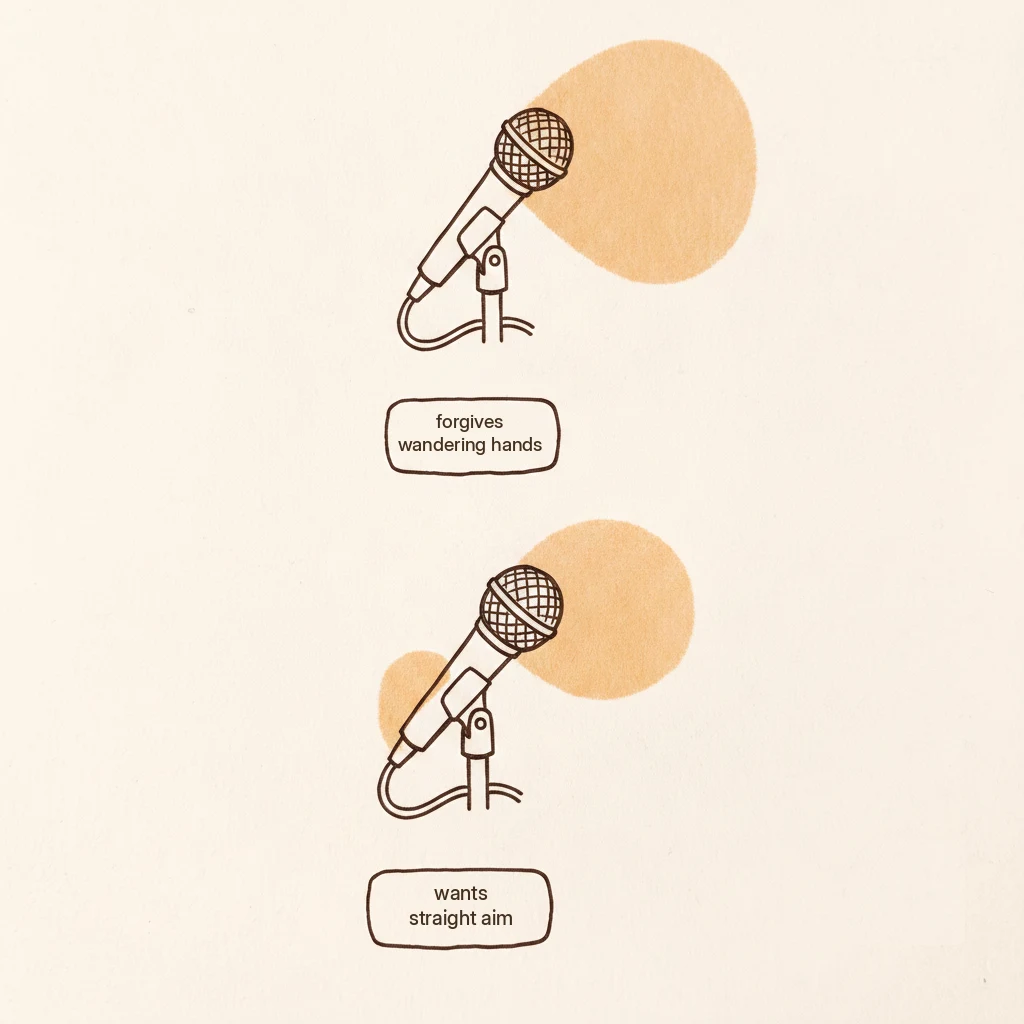
First, lower the stakes
Neither of these is a mistake. When sound engineers argue about this pair, the argument ends the same way every time: if you can’t get vocals to sound good through either 58, the problem is some other part of the system. Both mics are past the quality bar. This is a fit question, not a quality ladder, and the extra $70 doesn’t buy “better.” It buys different.
So relax, and let’s find out which different is yours.
What the Beta actually buys you
Shure’s own comparison lists the differences plainly. Translated out of spec language:
A tighter listening window. The SM58 is a cardioid: it hears a generous zone in front of itself and ignores what’s behind. The Beta 58A is a supercardioid: an even narrower window, better at rejecting the noise beside it. That’s why it can get louder in the monitors before feedback, which is the entire reason working singers buy it.
A hotter, brighter signal. About 4dB more output, and a lift in the upper mids that helps a voice cut through a loud band. Engineers reach for it on quiet singers and on voices that need help slicing through.
A tougher hat. Hardened grille, dents less. Genuinely nice on a mic that lives in a gig bag.
Read that list again, though, and notice what every item assumes: a singer who works close to the mic and keeps it pointed at their mouth. Which brings us to the actual decider.
One trap for upgraders
If you swap an SM58 for a Beta on an existing stage setup, the floor monitor placement changes. The SM58 rejects sound best from directly behind, so wedges sit straight in front of the singer. The supercardioid Beta rejects best at an angle off the rear instead, and hears a little from directly behind, so the wedge that was perfectly placed for the 58 is now aimed into the Beta’s ear. It’s in the manual nobody reads, and it’s the classic “my expensive new mic feeds back MORE” mystery.
And the cheaper cousin
Since it always comes up: the SM48 is Shure’s budget sibling, noticeably cheaper, similar look. It’s a real Shure and a fine spare or party mic, but it’s a different, softer-built capsule, not a discounted SM58. If the budget is the whole question, the honest floor is the $30 Behringer XM8500 from the live-mic guide, or a used SM58, which is my actual answer: these things do not die, and the used market is full of them.
If you buy through my links the site earns a little coffee money. Doesn’t change the price, doesn’t change my answer.
If you're figuring this out, you're probably also wondering:
Gus Harmon
Gus spent three decades running sound wherever somebody needed it: bar bands, weddings, school shows, and twelve years of Sunday mornings. He can't sing a note. He can make sure you're heard. Now he writes so normal people can buy the right thing the first time.