← your kid's instrument: costs, rentals, sticking with it
Clarinet vs Saxophone: Which One First?
Cousins with a reed each: the sax is easier to get going but heavier and several times the money; the clarinet is lighter, cheaper, harder in the first months. Young kid or tight budget: clarinet. Jazz-dreaming kid: rent the sax.
 Gus Harmon · Updated July 11, 2026 · how I decide
If you buy through my links the site earns a little. It's never why I pick things.
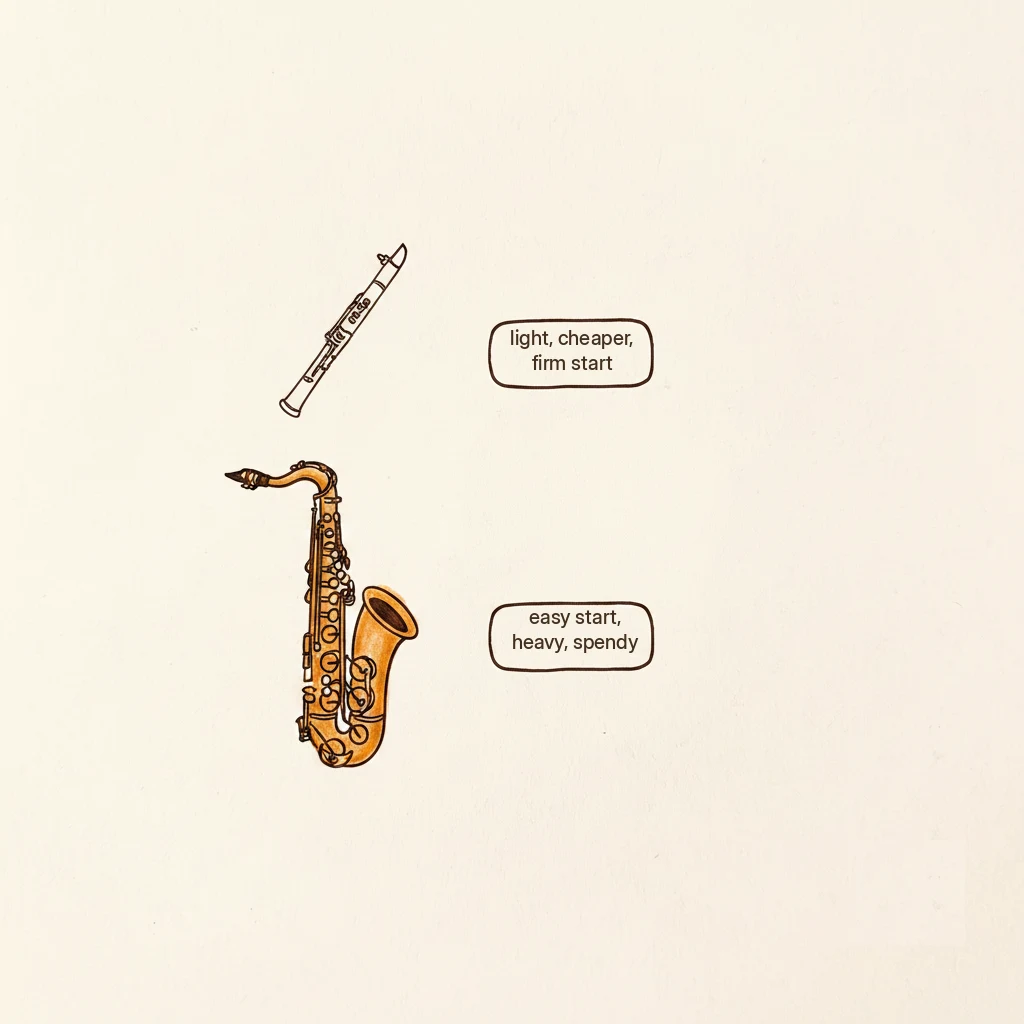
Same family, different bills
Start with what they share, because it’s the part that makes this decision reversible: both are single-reed instruments. The mouth skills are siblings, and a kid who switches between them later carries most of the work along. Band directors move kids across this line all the time.
Now the differences that matter at signup.
Getting a sound. The saxophone was invented late enough that ease of playing was a design goal, and it shows. Most kids get honest notes out of an alto sax quickly, and the fingering system is friendlier too: press the octave key and the notes keep their fingerings, just higher. The clarinet asks for a firmer, more precise embouchure from day one, its register key changes the NOTES and not just the octave, and the famous “break” squeaks every beginner for a stretch of month two or three.
Carrying it. An alto sax runs around two and a half kilos hanging off a neck strap; a plastic clarinet is a quarter of that. The sax’s keys also sit wider, a real stretch for small hands. For a small sixth grader, the clarinet is simply the better-fitting object.
The money. This is the loudest difference and the shelf whispers it: the saxophone costs several times the clarinet at every single step. Student horn, repairs, upgrades, all of it. A clarinet mistake stings; a saxophone mistake hurts. The full maps are in the clarinet cost guide and the sax cost guide, and the reasons behind sax pricing get their own page.
The folklore, examined honestly
You may hear the old advice: start on clarinet, and the sax will come easily later. It’s real, the clarinet’s stricter embouchure transfers DOWN to the sax gracefully, and plenty of great sax players started exactly that way.
But notice what that advice optimizes: the eventual musician’s technique. Parents are optimizing something else: whether the kid is still playing in April. A kid burning to play the saxophone who gets handed a clarinet “for their own good” often just quits, and then nobody transfers anything. The band directors’ consensus applies here as much as anywhere: the instrument the kid is most interested in is the instrument they’ll succeed on.
If the kid genuinely doesn’t care which: the clarinet is the cheaper, lighter, better-fitting default, and the plastic student Yamaha is famously indestructible. Details in the clarinet guide. One more clarinet-side note for later: when upgrade fever eventually hits, the move is a better mouthpiece, not an “intermediate” instrument. Clarinetists are emphatic about this.
And one sax-specific warning that saves real money: if a soprano saxophone (the small straight one) ever gets floated as a starter, decline. It’s the hardest of the family to play in tune. Beginners start on alto. The full sax path is in the sax guide.
If you're figuring this out, you're probably also wondering:
Gus Harmon
Gus spent three decades running sound wherever somebody needed it: bar bands, weddings, school shows, and twelve years of Sunday mornings. He can't sing a note. He can make sure you're heard. Now he writes so normal people can buy the right thing the first time.